
Professional Cooling Tower Water Treatment Solutions for Reliable System Performance
Cooling towers are critical to the operation of many commercial and industrial facilities, and effective cooling tower treatment solutions play a key role in maintaining their performance. When systems are properly managed, they remove heat efficiently, protect equipment, and support stable operations. When they are poorly managed, they can quickly become a source of inefficiency, equipment damage, and compliance risk.
Tandex provides reliable cooling tower treatment solutions designed to protect system performance, improve energy efficiency, and help sites meet Australian regulatory obligations with confidence. We combine proven chemistry, proactive monitoring, and practical expertise to keep your cooling towers operating safely and efficiently year-round.
By addressing the chemical, mechanical, and microbiological risks that affect cooling towers, we help businesses maintain reliable operations while avoiding unnecessary costs and disruptions.

Why Cooling Tower Treatment Is Essential
Cooling towers operate in an environment that naturally encourages contamination and chemical imbalance. Warm water, airborne debris, and constant evaporation create conditions where scale formation, corrosion, fouling, and microbiological growth can develop quickly if water chemistry is not carefully controlled.
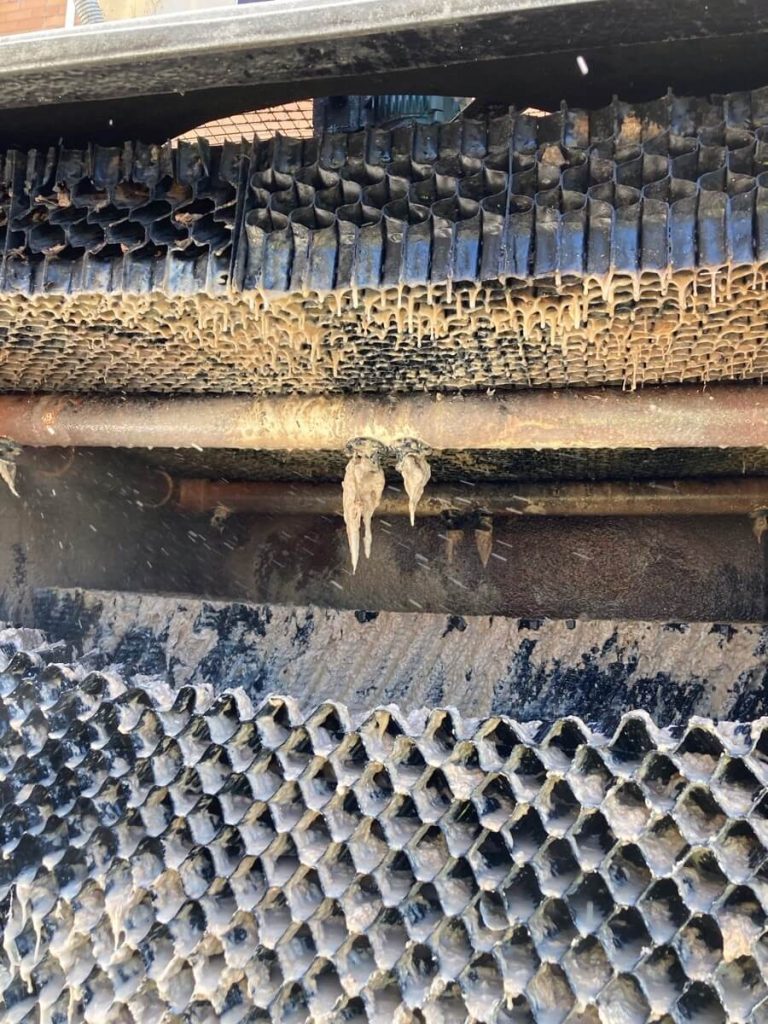
When these issues are allowed to progress, system performance can deteriorate rapidly. Scale deposits reduce heat-transfer efficiency, forcing chillers and condensers to work harder to achieve the same cooling output. Corrosion can damage pipework, heat exchangers, and tower components, while fouling restricts water flow and interferes with distribution systems. Microbiological growth can create slime layers that reduce efficiency and may also introduce serious hygiene risks.
Effective cooling tower treatment solutions focus on stabilising water chemistry and preventing these issues before they begin to affect system performance. This is achieved through a carefully balanced combination of chemical treatments designed to protect equipment, maintain water quality, and support reliable cooling tower operation.
The core components of a typical cooling tower treatment program include:
Corrosion & Scale Inhibitors
Biocides
pH Control Agents
Dispersants & Antifoams
Corrosion & Scale Inhibitors
Biocides
pH Control Agents
Dispersants & Antifoams
Together, these treatments form the foundation of effective cooling tower treatment solutions. However, chemical treatment alone is not enough to maintain a healthy cooling tower system. Successful programs also rely on regular monitoring, inspection, and adjustment to ensure water chemistry remains within optimal operating ranges as conditions change.
Without this ongoing management, even well-designed treatment programs can lose effectiveness over time. Continuous oversight ensures that small changes in water quality or system operation are detected early and corrected before they lead to scale formation, corrosion damage, or microbiological growth.
This proactive approach is what allows cooling towers to operate safely, efficiently, and reliably throughout the year.

Legionella Risk and Regulatory Responsibilities
Cooling towers require careful management not only for operational performance but also for public health. Poorly maintained systems can create conditions that allow Legionella bacteria to grow and spread through aerosolised water droplets.
Legionella occurs naturally in many water environments, but cooling towers can provide ideal conditions for growth when water temperatures, nutrients, and system hygiene are not properly controlled. If contaminated droplets are dispersed into the surrounding environment, building occupants or nearby members of the public may be exposed to Legionnaires’ disease.
Understanding how Legionella develops in water systems and how outbreaks occur is an important part of responsible cooling tower management. Effective treatment programs aim to minimise the conditions that allow these bacteria to multiply while maintaining safe system operation.
Cooling tower owners and operators must also comply with Australian regulatory requirements designed to reduce these risks, as outlined by the Victorian Department of Health. These obligations typically include regular inspection, cleaning, water quality testing, and maintaining a documented risk management program for the system.
Many sites underestimate how detailed these programs can be. Maintaining compliance requires clear procedures, accurate record keeping, and a thorough understanding of the key compliance responsibilities of cooling tower owners and responsible persons. These requirements form part of the broader framework of water treatment compliance obligations that apply to cooling towers and other high-risk water systems.
Legionella Risk and Regulatory Responsibilities
Cooling towers require careful management not only for operational performance but also for public health. Poorly maintained systems can create conditions that allow Legionella bacteria to grow and spread through aerosolised water droplets.
Legionella occurs naturally in many water environments, but cooling towers can provide ideal conditions for growth when water temperatures, nutrients, and system hygiene are not properly controlled. If contaminated droplets are dispersed into the surrounding environment, building occupants or nearby members of the public may be exposed to Legionnaires’ disease.
Understanding how Legionella develops in water systems and how outbreaks occur is an important part of responsible cooling tower management. Effective treatment programs aim to minimise the conditions that allow these bacteria to multiply while maintaining safe system operation.
Cooling tower owners and operators must also comply with Australian regulatory requirements designed to reduce these risks, as outlined by the Victorian Department of Health. These obligations typically include regular inspection, cleaning, water quality testing, and maintaining a documented risk management program for the system.
Many sites underestimate how detailed these programs can be. Maintaining compliance requires clear procedures, accurate record keeping, and a thorough understanding of the key compliance responsibilities of cooling tower owners and responsible persons. These requirements form part of the broader framework of water treatment compliance obligations that apply to cooling towers and other high-risk water systems.
Inspection, Cleaning and Mechanical Access
Chemical treatment is only one part of maintaining a reliable cooling tower. Regular inspection and physical cleaning are equally important for ensuring treatment programs remain effective.
Cooling towers continuously collect airborne dust, organic debris, and environmental contaminants. Over time, this material settles within the basin, distribution decks, and internal components of the tower. If not removed through routine maintenance, these deposits can interfere with water flow, reduce treatment effectiveness, and create conditions that encourage microbiological growth.
When fouling becomes significant, systems may require a thorough cooling tower cleaning to remove accumulated sludge, biofilm, and debris before normal treatment programs can regain control.
Another critical but often overlooked factor is the ability to safely inspect internal tower components. Drift eliminators, fill packs, and distribution decks must be accessible so that maintenance teams can inspect and clean them properly.
When towers are installed without safe access, these components can be difficult to inspect and maintain. Over time, this can lead to hidden fouling, reduced performance, and increased compliance risk. Ensuring safe access to drift eliminators and other internal tower components is therefore an important part of responsible cooling tower management.
The Operational and Financial Impact of Poor Treatment
Cooling tower treatment is often viewed simply as a maintenance cost. In reality, it plays a major role in controlling operating expenses and protecting system reliability.
Even small levels of scale or fouling can significantly reduce heat transfer efficiency. As heat exchange surfaces become coated with deposits, chillers and condensers must work harder to maintain the same cooling capacity. This increases energy consumption and accelerates wear on mechanical equipment.
Corrosion can also damage system components and shorten equipment life, leading to expensive repairs or unexpected shutdowns. In severe cases, systems may need to be taken offline while emergency maintenance is carried out.
For many facilities, the financial consequences of these events extend far beyond repair costs. Loss of production, uncomfortable building conditions, and operational disruptions can quickly escalate the overall impact.
Understanding the true operational and financial costs of cooling tower downtime underscores why preventive treatment programs are essential to protecting system reliability.
Effective cooling tower treatment solutions help minimise these risks by maintaining stable water chemistry, preventing deposit formation, and ensuring systems continue to operate efficiently.
The Operational and Financial Impact of Poor Treatment
Cooling tower treatment is often viewed simply as a maintenance cost. In reality, it plays a major role in controlling operating expenses and protecting system reliability.
Even small levels of scale or fouling can significantly reduce heat transfer efficiency. As heat exchange surfaces become coated with deposits, chillers and condensers must work harder to maintain the same cooling capacity. This increases energy consumption and accelerates wear on mechanical equipment.
Corrosion can also damage system components and shorten equipment life, leading to expensive repairs or unexpected shutdowns. In severe cases, systems may need to be taken offline while emergency maintenance is carried out.
For many facilities, the financial consequences of these events extend far beyond repair costs. Loss of production, uncomfortable building conditions, and operational disruptions can quickly escalate the overall impact.
Understanding the true operational and financial costs of cooling tower downtime underscores why preventive treatment programs are essential to protecting system reliability.
Effective cooling tower treatment solutions help minimise these risks by maintaining stable water chemistry, preventing deposit formation, and ensuring systems continue to operate efficiently.
How Tandex Supports Reliable Cooling Tower Operation
At Tandex, cooling tower treatment programs are designed around the specific operating conditions of each site. No two systems operate under the same circumstances, and treatment strategies must account for factors such as water quality, system design, operating temperatures, and environmental exposure.
Our technicians combine practical experience with advanced monitoring tools to maintain stable water chemistry and detect potential issues early. Routine site testing, automated dosing systems, and monitoring technology allow us to track trends in water quality and system performance, enabling adjustments before small changes develop into larger operational problems. Beyond chemical treatment, we provide practical support with system troubleshooting, maintenance planning, and operational optimisation. This ensures cooling towers continue to operate efficiently while meeting compliance requirements over the long term.
Ongoing management is essential to keep cooling towers safe, efficient, and reliable. A well-designed treatment program helps protect equipment, reduce energy consumption, and minimise the risk of operational disruption.
With more than 50 years of experience supporting Australian industry, Tandex delivers reliable cooling tower treatment solutions that balance performance, safety, and compliance across a wide range of operating environments.
Protect your system and maintain reliable performance with expert cooling tower treatment solutions. Speak with the Tandex team to arrange a site visit or discuss your requirements.
Protect your system and maintain reliable performance with expert cooling tower treatment solutions. Speak with the Tandex team to arrange a site visit or discuss your requirements.


