The Hidden Cost of downtime: How Unplanned Outages Destroy Revenue
In industrial operations, every minute of downtime has consequences, but most businesses still underestimate the true cost. When equipment stops, production stops. When production stops, revenue stops. And the longer the interruption, the sharper the financial impact becomes.
Most organisations think of downtime in terms of repair bills or a short disruption to routine work. In reality, the cost of downtime goes far beyond fixing the immediate problem. It affects output, customer confidence, labour efficiency, and long-term profitability. For many facilities, even a single hour of lost production can cost far more than the maintenance or part replacement that triggered the issue.
Below is a clear and practical breakdown of how downtime erodes revenue, and why strong water treatment plays a critical role in preventing these losses.
Downtime Does More Than Pause Production. It Cancels Revenue.
When equipment unexpectedly stops, the immediate focus is usually troubleshooting, which is entirely understandable. But the real financial damage often begins long before a technician even opens their toolkit. The cost of downtime shows up first in lost revenue, stalled output, and disrupted schedules. It’s the immediate, high-impact hit that businesses feel the moment production comes to a halt.
Lost Production Value (The Biggest Hit to Revenue)
Idle Labour Costs
Delayed Orders and Contractual Penalties
Customer Frustration and Future Revenue Loss
Lost Production Value (The Biggest Hit to Revenue)
Idle Labour Costs
Delayed Orders and Contractual Penalties
Customer Frustration and Future Revenue Loss
How Downtime Turns Into Real Financial Loss
Once you understand the broad operational impact downtime creates, the next step is recognising how these disruptions turn into measurable financial losses. The cost of downtime is rarely a single number; it’s a combination of lost production, idle labour, contract penalties, and long-term equipment stress that accumulates quietly in the background.

1. Lost Production Value: Understanding Non Recoverable Losses
This is the most financially damaging part of unplanned downtime. If your site normally produces $20,000 worth of product during a morning shift and your boiler or cooling system fails for three hours, that’s $7,000–$10,000 of revenue simply gone. Even if production resumes, those three hours’ worth of output are gone for good.
2. Wasted Labour and the Cost of Paying Teams to Stand Still
Wages don’t stop when the plant does. Operators, packers, supervisors, trades, and maintenance staff remain on the clock whether they’re working or waiting. In plants with multiple shifts or 24/7 operations, the labour component of downtime costs can easily reach thousands per hour.
3. Contractual Penalties and Downstream Disruptions
If your operation supplies key components or finished goods to other businesses, your downtime becomes their disruption. That can lead to late fees, renegotiated delivery windows, lost manufacturing slots, or breach of service-level commitments. These penalties can erode profit margins quickly.
4. Increased Wear and Tear from Restarting Equipment
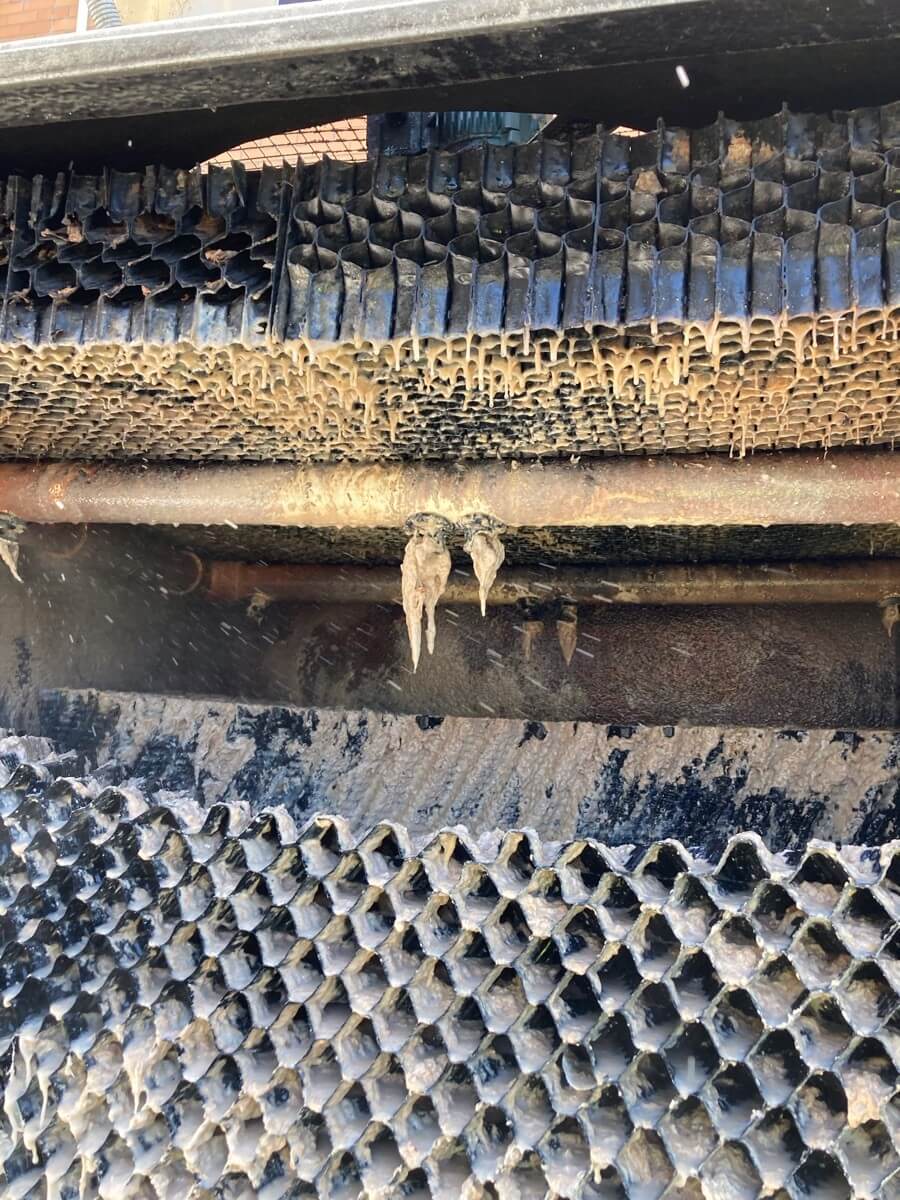
Restarting boilers, cooling towers, heat exchangers, or closed-loop systems after a forced shutdown is not a gentle process. Cold starts cause thermal stress, pressure changes accelerate corrosion, and unstable water chemistry during the reset can damage components. As a result, future failures occur sooner and the long-term cost of downtime increases.
5. Reputational Damage and Loss of Confidence
Clients, auditors, and internal stakeholders notice patterns. A site with unpredictable outages is often seen as higher risk. This can affect future contracts, preferred-supplier status, or audit results. While difficult to quantify, the reputational component of downtime can be among the most expensive.
Why Water Treatment Is Central to Preventing Costly Downtime
Most unplanned outages caused by boilers, cooling towers, heat exchangers, or closed-loop systems stem from preventable water-related issues. Strong water treatment dramatically reduces equipment failures, protects heat-transfer efficiency, and prevents the chemical and mechanical problems that commonly trigger shutdowns. Here’s how water treatment reduces the cost of downtime:
With the right water treatment partner, most downtime events caused by water systems can be avoided long before they reach a critical point.
Downtime is one of the most expensive operational risks a facility can face. Its true cost lies not in the maintenance bill, but in the hidden revenue lost for every minute production is halted. When you consider lost output, idle labour, contract penalties, equipment stress, and customer impact, the cost of downtime often outweighs the repair itself many times over.
Preventing downtime isn’t just an operational goal. It’s a revenue-protection strategy.
If you want greater visibility over your operational risks and stronger system reliability before minor issues escalate into costly outages, our team can review your current setup and help safeguard your site against preventable downtime. Get in touch to arrange a consultation.