What is a Cooling Tower Super Clean and Why Every Tower Needs One Eventually
Cooling towers are a critical part of many commercial and industrial cooling systems, yet they are often one of the most overlooked pieces of plant equipment when it comes to long-term cleanliness and internal condition. From the outside, a cooling tower can appear to be operating normally. The water may look relatively clean, routine maintenance may be occurring, and a water treatment program may be in place to control corrosion, scaling and microbial growth. Despite this, significant fouling can still be developing deep within the tower, which is often why a cooling tower super clean eventually becomes necessary.
Over time, contamination gradually accumulates within internal components such as fill packs, drift eliminators and distribution systems. Because these areas are difficult to access during routine servicing, fouling can build up without being immediately visible. When this occurs, normal water treatment alone may not be enough to restore the internal condition of the tower.
Understanding how and why fouling develops inside cooling towers helps explain why this type of deep cleaning is sometimes necessary. In the sections below, we will look at how contamination enters cooling towers, why routine treatment cannot always remove it,and how a cooling tower super clean can restore the system to proper operating condition.
Why Cooling Towers Get Dirty Even With Good Maintenance
Cooling towers naturally collect contamination because they continuously move large volumes of both air and water through the system. As air is drawn through the tower to remove heat from the circulating water, it also carries contaminants from the surrounding environment. Over time, these contaminants enter the cooling water and become trapped within the tower. Common sources of contamination include:
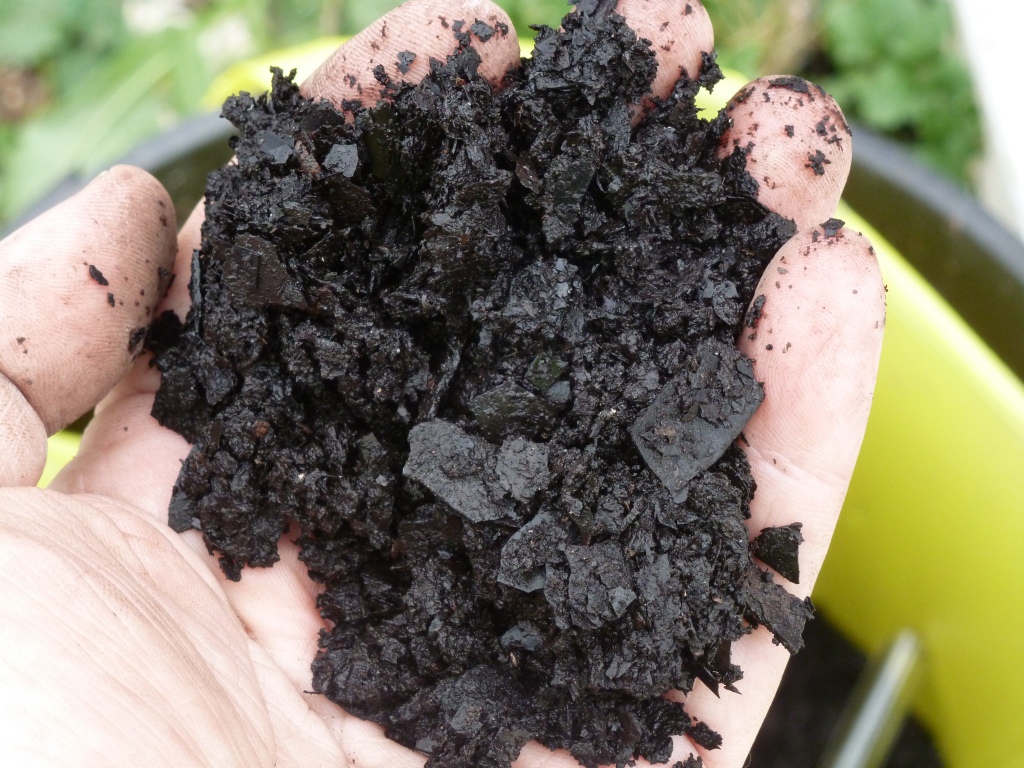
Once these contaminants enter the tower, many of them do not simply pass through the system. Instead, they become trapped within internal components where water is distributed, and heat is transferred. Even with regular servicing and a well-managed water treatment program, this material continues to circulate, and deposits gradually accumulate in areas such as:
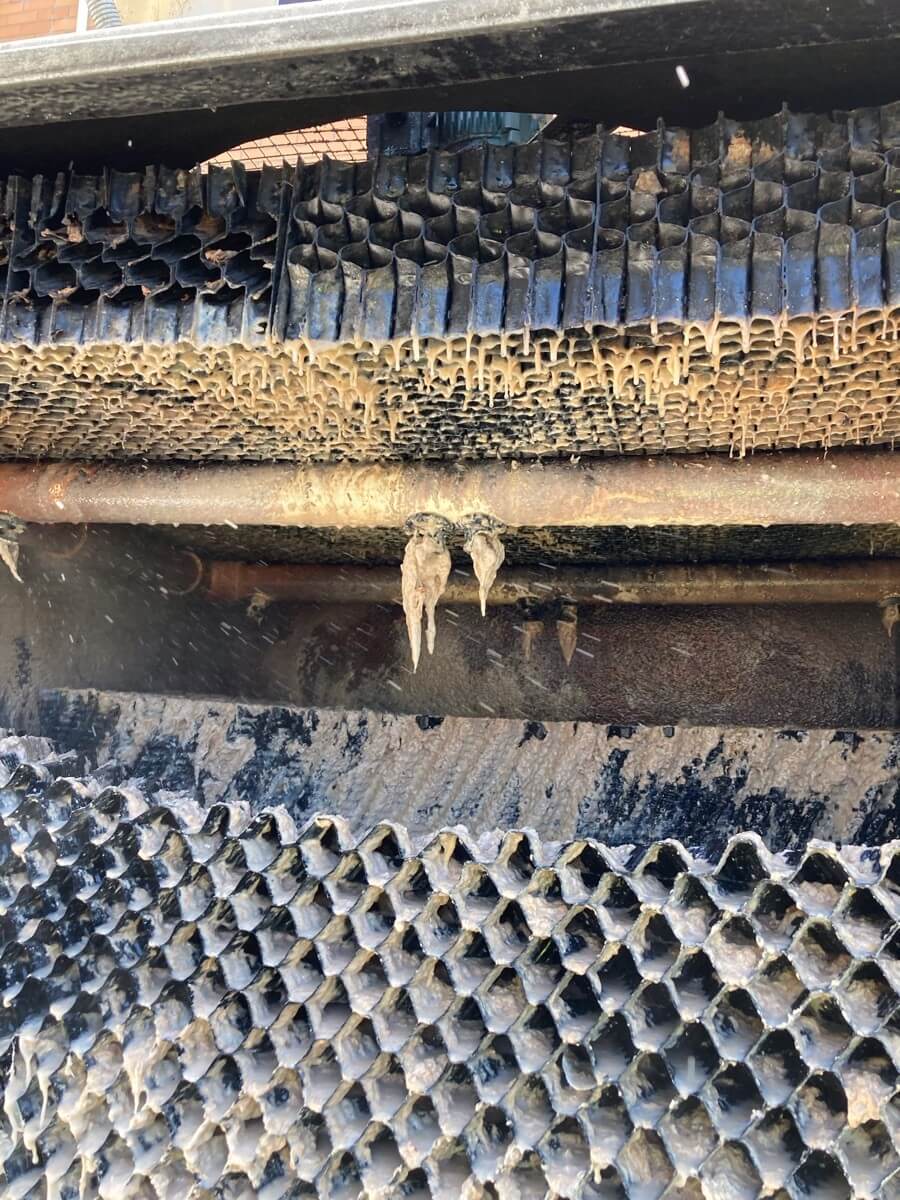
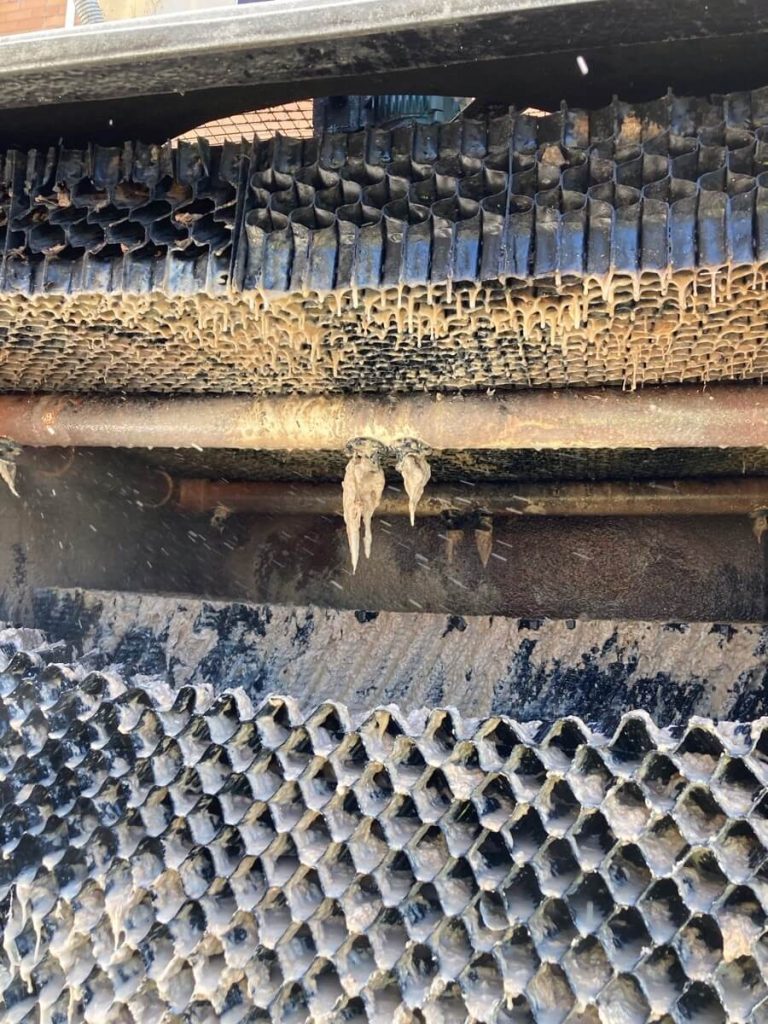
Fill packs, in particular, are prone to collecting contamination. Their design creates a very large surface area, allowing water to spread out and maximising cooling efficiency. While this improves heat transfer, it also creates ideal conditions for debris and biological growth to become trapped within the structure.
As these deposits build up, they begin to restrict water distribution, reduce heat-transfer efficiency, and create protected areas where microbial growth can develop. Over time, this accumulation can affect both system performance and hygiene, at which point deeper cleaning may be required.
Why Water Treatment Alone Cannot Remove Fouling
A well-managed water treatment program is essential for protecting cooling towers. Treatment chemicals help control corrosion, limit scale formation and manage microbial growth within the circulating water. When correctly maintained, these programs play a critical role in maintaining water quality and protecting system components from chemical and biological damage.
However, water treatment programs are designed to control water chemistry rather than physically remove contamination already present in the system. While chemicals can manage corrosion, scaling and microbial activity, they cannot eliminate debris and deposits that have become established within the tower.
Another important factor contributing to this buildup is biofilm formation.
Biofilm is a layer of microorganisms that attaches itself to internal surfaces inside the tower. As this layer develops, it begins to trap debris and organic material circulating through the system. Over time, this creates a sticky matrix that allows contamination to accumulate more easily. This environment can make it increasingly difficult for disinfectants to reach and control bacteria living within the biofilm. Even when water chemistry is being managed correctly, accumulated fouling can reduce the overall effectiveness of the treatment program.
For this reason, cooling towers occasionally require a deeper cleaning to physically remove deposits that have formed within the system. A cooling tower super clean targets these hidden deposits and restores the internal surfaces so the water treatment program can work more effectively.
A well-managed water treatment program is essential for protecting cooling towers. Treatment chemicals help control corrosion, limit scale formation and manage microbial growth within the circulating water. When correctly maintained, these programs play a critical role in maintaining water quality and protecting system components from chemical and biological damage.
However, water treatment programs are designed to control water chemistry rather than physically remove contamination already present in the system. While chemicals can manage corrosion, scaling and microbial activity, they cannot eliminate debris and deposits that have become established within the tower.
Another important factor contributing to this buildup is biofilm formation.
Biofilm is a layer of microorganisms that attaches itself to internal surfaces inside the tower. As this layer develops, it begins to trap debris and organic material circulating through the system. Over time, this creates a sticky matrix that allows contamination to accumulate more easily. This environment can make it increasingly difficult for disinfectants to reach and control bacteria living within the biofilm. Even when water chemistry is being managed correctly, accumulated fouling can reduce the overall effectiveness of the treatment program.
For this reason, cooling towers occasionally require a deeper cleaning to physically remove deposits that have formed within the system. A cooling tower super clean targets these hidden deposits and restores the internal surfaces so the water treatment program can work more effectively.
Signs a Cooling Tower May Need a Super Clean
Cooling towers can operate for many years without receiving a deep internal clean, which is why understanding how often a cooling tower super clean should be performed is important for long-term system management. Because fouling tends to accumulate gradually, the warning signs are not always obvious at first. In many cases, the system continues to operate, but underlying problems slowly begin to develop.
One of the most common indicators is persistent high Heterotrophic Colony Counts (HCC), particularly when they recur despite routine monitoring and treatment. In some situations, facilities may also experience repeated Legionella detections, which can indicate that bacteria are being protected within fouled areas of the system. Operational performance can also begin to change over time. Fouled fill packs and internal components may cause uneven water distribution throughout the tower, reducing heat-transfer efficiency.
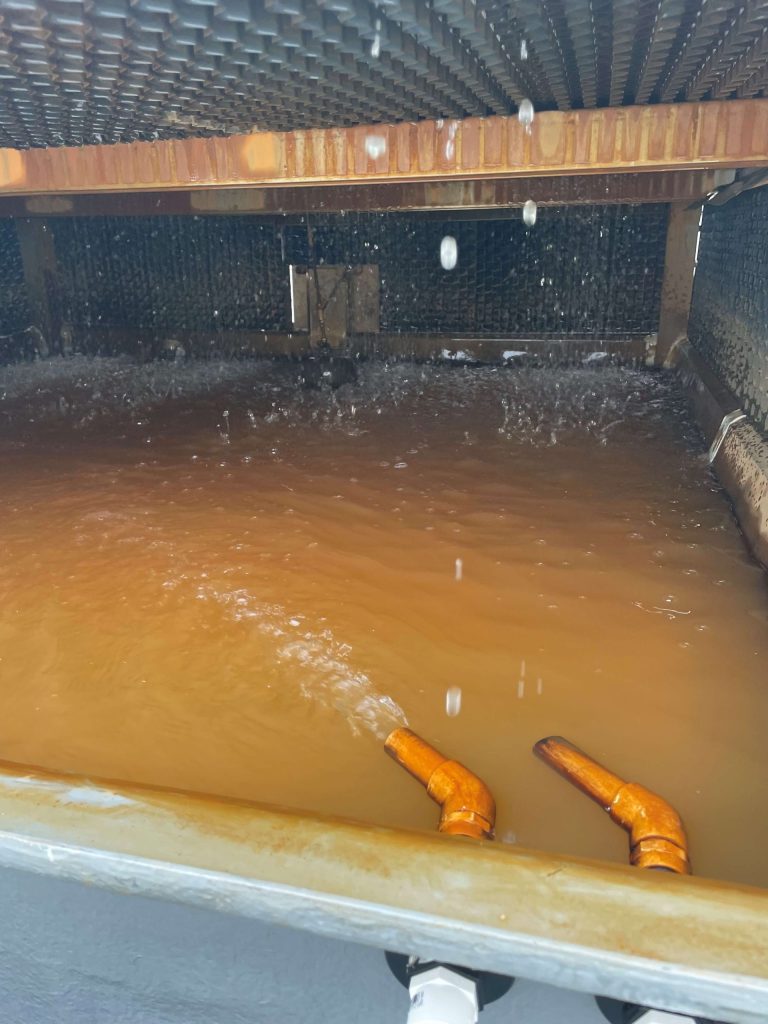
As cooling performance declines, the chiller plant may need to work harder to achieve the same level of cooling, resulting in increased energy consumption. Other signs can include blocked spray nozzles, excessive drift or splash out, and unpleasant odours around the tower. Even visible slime or fouling in the basin can be an early indication of deeper contamination within the tower internals.
In some situations, these issues can occur even when routine testing and water treatment appear to be in place.
A recent example involved a facility that contacted our team after experiencing repeated Legionella detections from routine and remedial testing. At the time, we were not their water treatment provider, but the site approached us specifically because the problem had not been resolved. During our discussion, one of the first questions we asked was whether the tower had ever undergone a cooling tower super clean. The site team were surprised to learn that this type of deep internal cleaning even existed. After reviewing the situation, it became clear that significant internal fouling was likely contributing to the ongoing microbial issues. A super clean was organised and completed within a week, so the tower could be properly restored, and the water treatment program could regain control of the system.
One of the most common indicators is persistent high Heterotrophic Colony Counts (HCC), particularly when they recur despite routine monitoring and treatment. In some situations, facilities may also experience repeated Legionella detections, which can indicate that bacteria are being protected within fouled areas of the system. Operational performance can also begin to change over time. Fouled fill packs and internal components may cause uneven water distribution throughout the tower, reducing heat-transfer efficiency.
As cooling performance declines, the chiller plant may need to work harder to achieve the same level of cooling, resulting in increased energy consumption. Other signs can include blocked spray nozzles, excessive drift or splash out, and unpleasant odours around the tower. Even visible slime or fouling in the basin can be an early indication of deeper contamination within the tower internals.
In some situations, these issues can occur even when routine testing and water treatment appear to be in place.
A recent example involved a facility that contacted our team after experiencing repeated Legionella detections from routine and remedial testing. At the time, we were not their water treatment provider, but the site approached us specifically because the problem had not been resolved. During our discussion, one of the first questions we asked was whether the tower had ever undergone a cooling tower super clean. The site team were surprised to learn that this type of deep internal cleaning even existed. After reviewing the situation, it became clear that significant internal fouling was likely contributing to the ongoing microbial issues. A super clean was organised and completed within a week, so the tower could be properly restored, and the water treatment program could regain control of the system.
What Happens During a Cooling Tower Super Clean
A cooling tower super clean is a structured cleaning process designed to restore the tower’s internal condition. Unlike routine cleaning, which usually focuses on accessible areas such as the basin and visible surfaces, a super clean involves a deeper internal clean of critical components throughout the system.
A cooling tower super clean is a structured cleaning process designed to restore the tower’s internal condition. Unlike routine cleaning, which usually focuses on accessible areas such as the basin and visible surfaces, a super clean involves a deeper internal clean of critical components throughout the system.
The process normally begins with the circulation of a specialised scouring chemical through the tower. This chemical is circulated through the system for around 24 hours prior to the clean, allowing it time to penetrate deep into the tower and loosen biofilm, sludge and embedded debris that have built up on internal surfaces. Circulating the chemical through the system helps reach areas that are difficult to access manually and prepares the tower for the physical cleaning stage.
Once this initial stage has loosened the accumulated fouling, technicians carry out a detailed manual cleaning of the tower internals. This includes cleaning the basin, internal walls, drift eliminators, air intake louvres and other accessible components where debris and biological growth commonly collect.
The process normally begins with the circulation of a specialised scouring chemical through the tower. This chemical is circulated through the system for around 24 hours prior to the clean, allowing it time to penetrate deep into the tower and loosen biofilm, sludge and embedded debris that have built up on internal surfaces. Circulating the chemical through the system helps reach areas that are difficult to access manually and prepares the tower for the physical cleaning stage.
Once this initial stage has loosened the accumulated fouling, technicians carry out a detailed manual cleaning of the tower internals. This includes cleaning the basin, internal walls, drift eliminators, air intake louvres and other accessible components where debris and biological growth commonly collect.
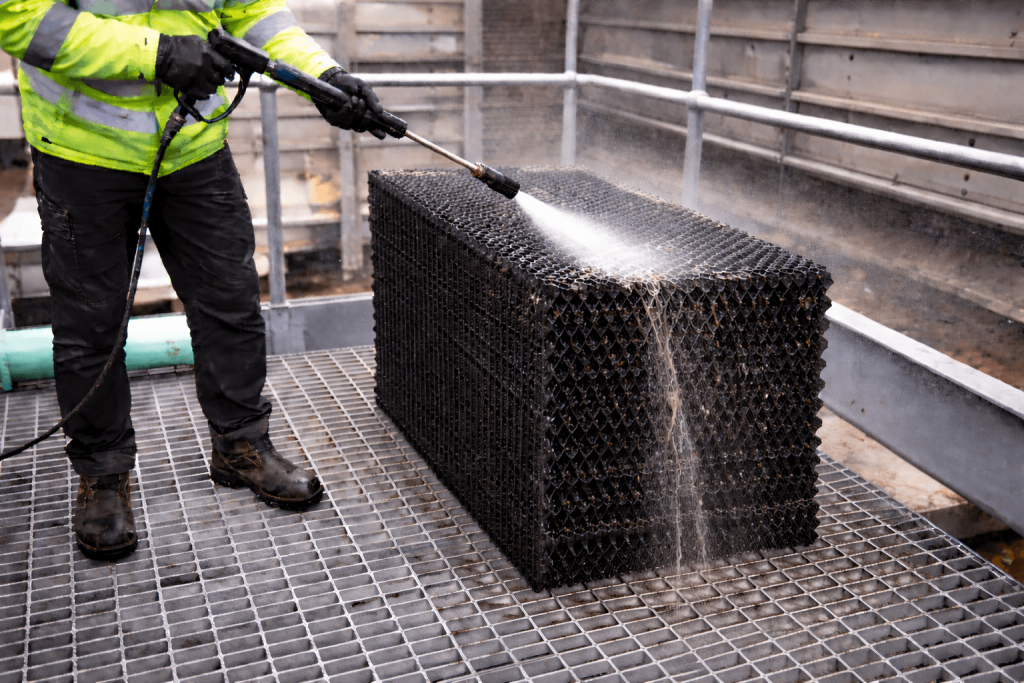
A key difference between a super clean and a standard tower clean is how the fill packs are treated. During a super clean, the fill packs are typically removed from the tower so they can be properly cleaned and flushed, allowing trapped debris, sludge and biological growth within the fill structure to be fully removed. Because fill packs contain a very large surface area designed to maximise heat transfer, they are particularly prone to trapping contamination and can be difficult to clean effectively without removing them from the tower.
A key difference between a super clean and a standard tower clean is how the fill packs are treated. During a super clean, the fill packs are typically removed from the tower so they can be properly cleaned and flushed, allowing trapped debris, sludge and biological growth within the fill structure to be fully removed. Because fill packs contain a very large surface area designed to maximise heat transfer, they are particularly prone to trapping contamination and can be difficult to clean effectively without removing them from the tower.
After the internal components have been cleaned and any loose debris has been removed, the system is rinsed and prepared for recommissioning. Once the tower is returned to operation, the water treatment program can work more effectively because the accumulated fouling has been removed from the system.
How Fouling Affects Tower and Chiller Performance
When fouling begins to build up inside a cooling tower, the impact extends beyond the tower itself. Over time, it can affect the performance of the entire cooling system it’s connected to.
Fill packs rely on clear water and airflow to remove heat efficiently from the circulating water. When debris, biological growth or sludge begins to accumulate within the fill, these pathways become restricted. This reduces the tower’s ability to reject heat effectively, which can result in higher condenser water temperatures returning to the plant. As condenser temperatures rise, the chiller system must work harder to maintain the same cooling output, increasing energy consumption and reducing overall efficiency.
Fouling can also disrupt the distribution of water through the tower. Blocked spray nozzles or contaminated distribution systems may cause uneven water flow across the fill packs, further reducing cooling performance. At the same time, accumulated deposits can create conditions that make microbial control more difficult, contributing to ongoing hygiene challenges within the system.
Left unmanaged, this gradual buildup can lead to higher operating costs, declining cooling efficiency and increasing difficulty maintaining stable system performance.
How Fouling Affects Tower and Chiller Performance
When fouling begins to build up inside a cooling tower, the impact extends beyond the tower itself. Over time, it can affect the performance of the entire cooling system it’s connected to.
Fill packs rely on clear water and airflow to remove heat efficiently from the circulating water. When debris, biological growth or sludge begins to accumulate within the fill, these pathways become restricted. This reduces the tower’s ability to reject heat effectively, which can result in higher condenser water temperatures returning to the plant. As condenser temperatures rise, the chiller system must work harder to maintain the same cooling output, thereby increasing energy consumption, reducing overall efficiency, and raising operating costs.
Fouling can also disrupt the distribution of water through the tower. Blocked spray nozzles or contaminated distribution systems may cause uneven water flow across the fill packs, further reducing cooling performance. At the same time, accumulated deposits can create conditions that make microbial control more difficult, contributing to ongoing hygiene challenges within the system.
Left unmanaged, this gradual buildup can lead to higher operating costs, declining cooling efficiency and increasing difficulty maintaining stable system performance.
How Often Should a Cooling Tower Super Clean Be Performed
A cooling tower super clean is not usually part of routine monthly servicing, but it is an important component of long-term tower maintenance. Over time, internal deposits accumulate in most cooling towers, so deeper cleaning may occasionally be required to restore the system.
In many systems, a cooling tower super clean is typically carried out every few years, although the exact timing can vary depending on operating conditions. Towers located in dusty environments, near construction activity, or exposed to high levels of airborne debris may accumulate contamination more quickly. Systems that operate continuously throughout the year may also require deep cleaning more frequently than towers that operate only seasonally.
For this reason, no single interval applies to every cooling tower. However, all towers will eventually benefit from a super clean at some point during their operating life. Carrying out this type of deep clean periodically helps remove internal deposits before they begin to affect cooling performance, microbial control and overall system reliability.
A cooling tower super clean is not usually part of routine monthly servicing, but it is an important component of long-term tower maintenance. Over time, internal deposits accumulate in most cooling towers, so deeper cleaning may occasionally be required to restore the system.
In many systems, a cooling tower super clean is typically carried out every few years, although the exact timing can vary depending on operating conditions. Towers located in dusty environments, near construction activity, or exposed to high levels of airborne debris may accumulate contamination more quickly. Systems that operate continuously throughout the year may also require deep cleaning more frequently than towers that operate only seasonally.
For this reason, no single interval applies to every cooling tower. However, all towers will eventually benefit from a super clean at some point during their operating life. Carrying out this type of deep clean periodically helps remove internal deposits before they begin to affect cooling performance, microbial control and overall system reliability.
Benefits of a Cooling Tower Super Clean
Removing accumulated fouling from a cooling tower can deliver several important operational improvements. When internal deposits are cleared from fill packs and distribution systems, water and air can move through the tower more evenly. This allows the tower to reject heat more effectively and operate closer to its original design performance.
Improved heat rejection at the tower also helps reduce the load placed on the connected chiller plant. When condenser water temperatures remain lower, the chiller does not need to work as hard to achieve the required cooling output. Over time, this can reduce energy consumption and improve efficiency across the entire cooling system.
A cooling tower super clean also restores more stable water distribution throughout the tower. Clearing deposits from spray systems and internal components helps maintain consistent water flow across the fill packs, supporting reliable operation and reducing performance fluctuations.
Finally, removing accumulated debris and biofilm helps restore more effective microbial control within the system. Fouling deposits can create protected environments where bacteria survive despite chemical treatment. By physically removing these deposits, disinfectants and other treatment chemicals can work more effectively, supporting ongoing hygiene management and extending the service life of cooling tower components.
A cooling tower super clean plays an important role in maintaining cooling tower performance and system reliability. The key points to remember are:
If your cooling tower has never undergone a deep internal clean, or if ongoing fouling or microbial issues are becoming difficult to manage, it may be worth assessing whether a super clean could help restore proper control of the system. If you would like to discuss the condition of your cooling tower or arrange an assessment, contact our team, and we will be happy to help.